-12 LUFS vs -14 LUFS: Which Should You Choose for YouTube Music?
When mastering tracks for YouTube, one of the most common questions is which loudness target to use. Two numbers appear most often: -12 LUFS and -14 LUFS.
Both can work. The better choice depends on the type of music you make and how you want it to feel on the platform.
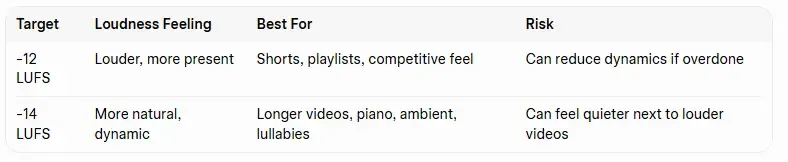
Why -12 LUFS Is Popular
Many creators aim for around -12 LUFS because:
- The track feels more competitive when played next to other YouTube content
- It holds attention better on mobile speakers
- Shorts and playlist-style videos often benefit from higher perceived loudness
If you use a browser mastering tool, starting with a -12 LUFS target and a -1.0 dBTP True Peak ceiling is a practical default for a lot of Suno-based music.
When -14 LUFS Makes More Sense
-14 LUFS is closer to the loudness level that many streaming platforms normalize toward. It usually preserves more dynamic range and transient detail.
This target works especially well for:
- Solo piano
- Ambient and atmospheric tracks
- Lullabies and calm instrumental music
- Longer-form videos where listener fatigue matters
If the music relies on space, soft attacks, or emotional dynamics, pushing it to -12 LUFS can sometimes make it feel flatter or more compressed.
A Practical Way to Decide
- Master one version at -12 LUFS and another at -14 LUFS.
- Listen to both on the same device at the same volume.
- Pay attention to:
- Vocal or melody clarity
- Kick and bass impact (if any)
- Overall fatigue after 1–2 minutes
- Choose the version that still sounds musical, not just louder.
Loudness is only useful when it doesn’t damage the character of the track.
True Peak Still Matters
Whatever LUFS target you choose, keeping a True Peak ceiling around -1.0 dBTP (or lower) is recommended. This gives the file a small safety margin after YouTube’s encoding process and reduces the chance of unwanted distortion.
Final Recommendation
- Use -12 LUFS when you want the track to feel stronger and more competitive, especially for Shorts or upbeat playlist content.
- Use -14 LUFS when the music benefits from more breathing room and natural dynamics.
There is no single correct answer. The best target is the one that serves the song rather than just chasing a number.
You can test both approaches quickly with a free browser mastering tool here: